

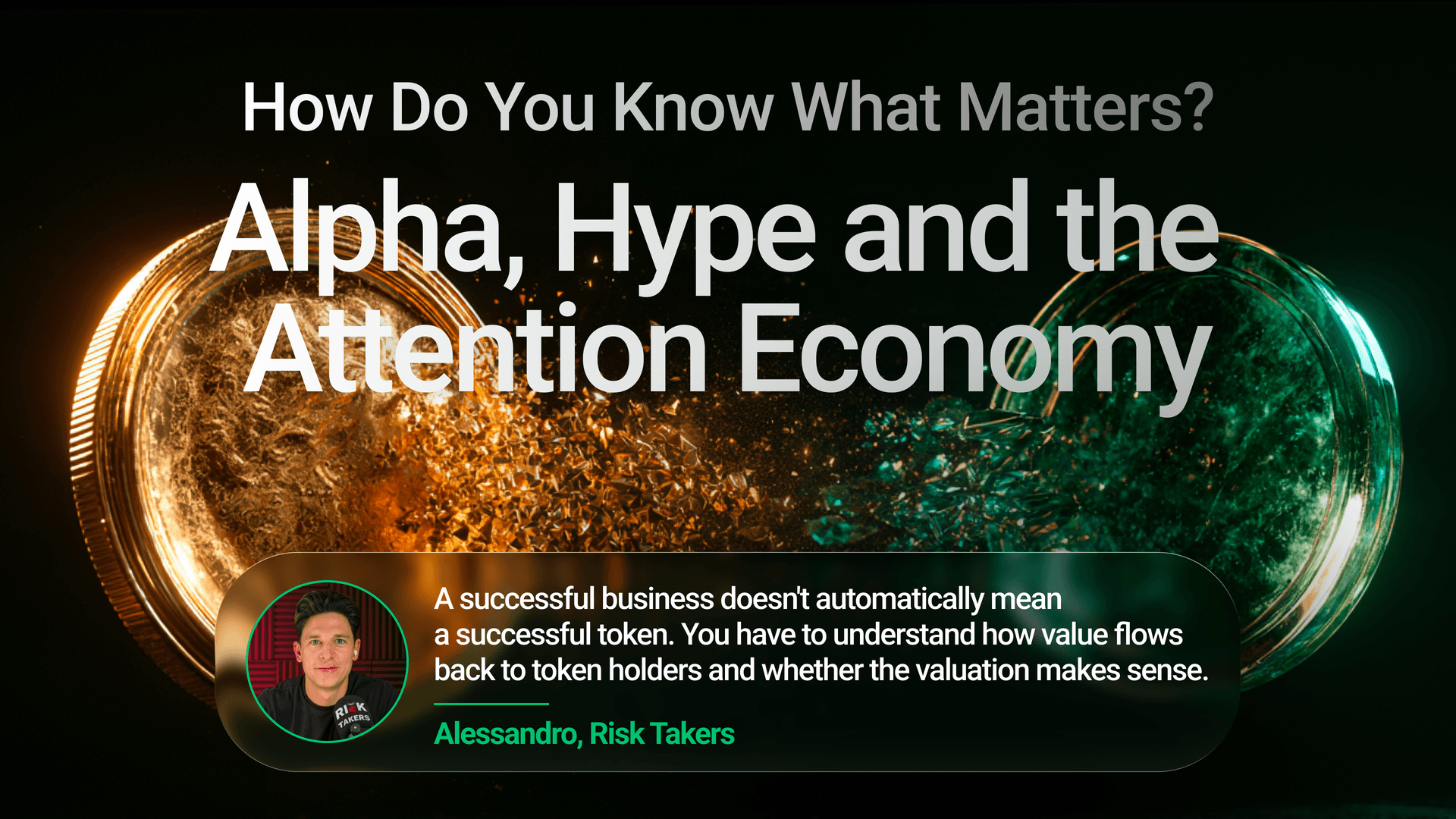
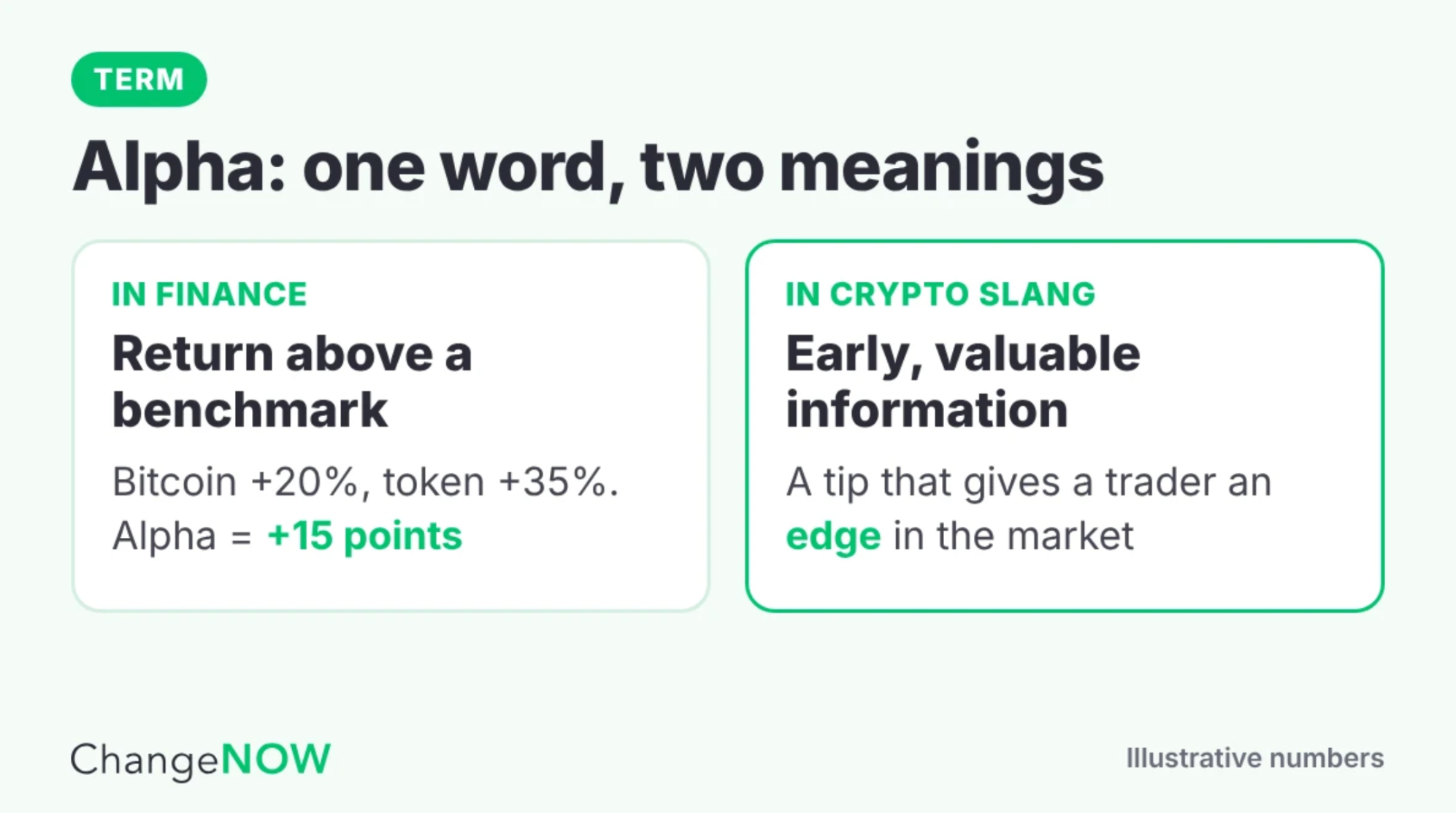
Alpha in crypto is early information that gives a trader an edge. Before acting on it, experienced traders check whether the tip is reliable and decide how much they are ready to lose if it turns out wrong.
We created this article in partnership with Crypto Banter, whose YouTube channel has 1.18 million subscribers as of October 28, 2026. Alessandro Gibilaro, a podcaster and author at Crypto Banter, told us how his view of alpha changed over several market cycles.
Disclaimer: This article is educational and is not financial advice. Quotes reflect the views of their author.
Key Takeaways
- Alpha in crypto means early, valuable information, while in finance the word means return above a benchmark.
- Traders find alpha on X, in project forums, on GitHub and in on-chain data, and every find needs checking.
- Fresh liquidity, busy wallets and a rising price can be artificial, so a tip may end in a rug pull.
- Risk management is the discipline that sits between finding alpha and buying a token.
- TVL, FDV and transaction counts can look strong on their own, so check them on specialized platforms.
What Does Alpha Mean in Crypto?
In crypto slang, alpha means valuable information that arrives early, such as a tip about a new token, an upcoming announcement or a project few people have noticed. The word comes from finance, where alpha measures how much an investment beat a benchmark. CoinTracker gives Bitcoin and ETH as examples of such a benchmark.
Alessandro Gibilaro remembers how he saw alpha from the start.
"When you're new to crypto, you think alpha means finding a coin before everyone else and watching it do 100x." – Alessandro Gibilaro, podcaster and author at Crypto Banter
That view matches typical examples of alpha in crypto: new token drops, little-known NFT mints, low-cap projects and upcoming airdrops. Being first to know can also be a status symbol among crypto users.
Where Do Traders Find Alpha?
Traders find alpha on X, in project communities and governance forums, on GitHub and in on-chain data. Start with these places:
| Where to look | Examples | What it can show |
|---|---|---|
| X (Crypto Twitter) | Lookonchain, Whale Alert and Wu Blockchain | Large wallet moves, as whale trackers flag them, and breaking crypto news |
| Discord and Telegram | Arbitrum Discord and other official channels linked from a project's own website | Announcements, testnet news and campaign rules. Links that arrive in DMs or replies can be scams |
| Governance forums | Uniswap governance forum and Optimism governance forum | Proposals before they reach a vote, such as the Uniswap Temp Check on protocol fee expansion in October 2026 |
| GitHub | Lido and Ethereum on GitHub | New repositories and code updates, such as the core repository with the Lido DAO smart contracts, which can show that a team is building |
| On-chain data |
Any tip from these places is only a lead until it is checked. The next sections cover how to check it and how to limit the loss if it turns out wrong.
How Does the Meaning of Alpha Change With Experience?
With experience, alpha in crypto often stops being one lucky find. After a few cycles a trader may also count four things as alpha:
- spotting a narrative early;
- recognising when something is overvalued;
- understanding where liquidity is moving;
- knowing when not to trade.
"Alpha isn't just finding the next opportunity. It's understanding the risk, knowing what would prove you wrong, and having the discipline to act on that information." – Alessandro Gibilaro, podcaster and author at Crypto Banter
On X, Alessandro Gibilaro adds another angle: being early is often messy and confusing, with things breaking all the time, and that friction can create an edge for those who understand the developments as they unfold.
How Does Risk Management Fit Into Alpha?
Risk management fits into alpha as the routine a trader runs between finding information and buying a token. Alpha is the information itself. Like critical thinking, risk management is a habit of weighing many factors before acting, and it works with any tip.
The brain tends to prefer quick rewards to slow analysis, and a fresh tip often feels like a small hit of dopamine. Alpha is exactly that kind of flash, which is why the habit of weighing several factors deliberately matters before any purchase.
Before every purchase, go through these points one by one:
- Write the thesis in one sentence: why should this token gain value?
- Name what would prove the thesis wrong, such as a drained liquidity pool or a team that stops shipping code.
- Check liquidity and supply: who holds the tokens, when locked tokens reach the market and how easily a position can be sold.
- Size the position so that a total loss stays survivable.
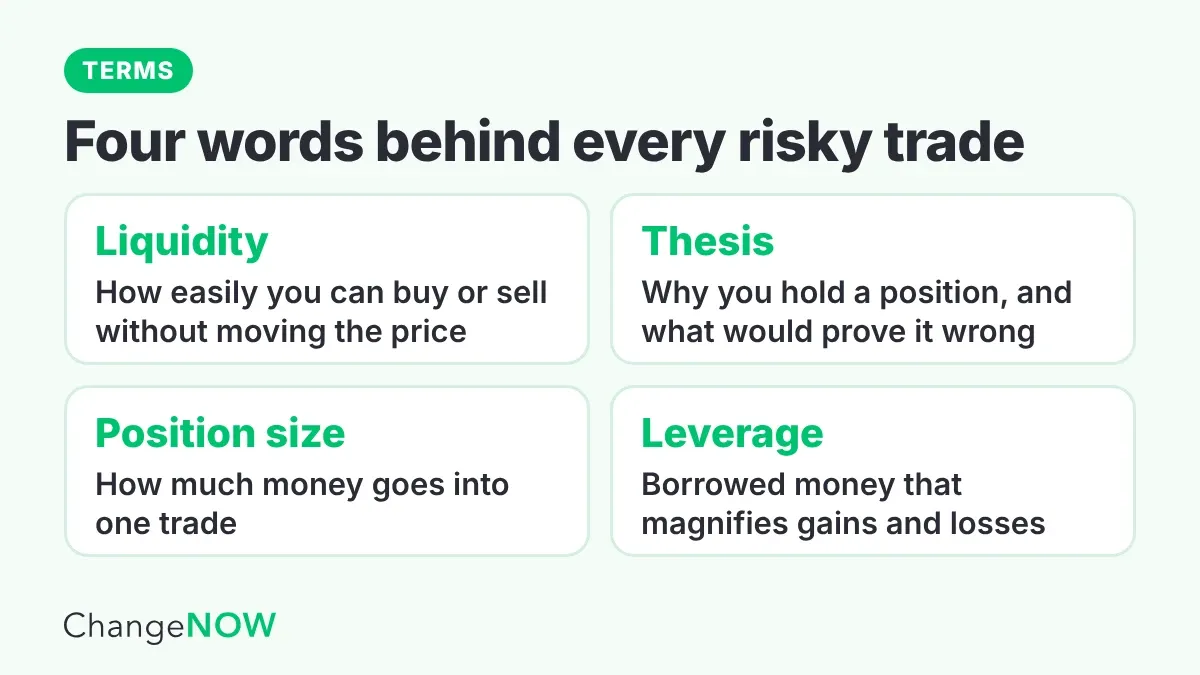
- Decide on leverage before entering, since leverage can turn a small move against the trader into a margin call.
"Risk management doesn't get as much attention because it's not as exciting as calling the next big winner. But surviving a bear market gives you the opportunity to take advantage of the next one." – Alessandro Gibilaro, podcaster and author at Crypto Banter
Even a great project can cost a trader money when the timing is bad, the leverage is too high or the position is too big. In a Risk Takers episode, Animoca CEO Robby Yung describes how a margin call took him to zero.
Four terms come up in almost every risk plan.
How Can a Trader Check Whether Alpha Is Real?
To check whether alpha is real, test the claim against independent data, because inflows, wallet counts and even a rising price can all be manufactured. Three patterns show up most often:
- Artificial liquidity. Developers or insiders add money to a pool so a token looks attractive to trade, then withdraw it. When creators pull everything out of the liquidity pool, the price can fall to zero, which is a rug pull.
- Sybil activity. One person creates many wallets to imitate users, a method known as a Sybil attack.
- Recycled capital. The same funds rotate between narratives and wallets, which shows up as volume without new money behind it.
Before acting on a tip, look it up on the market data platforms listed above, which is what doing your own research means in practice. Some alpha is outdated or built to pump a price, so the source of a tip matters as much as the tip.
Checking takes effort because crypto is full of data and opinions, and anyone can post a dashboard or a claim about the next 100x. Each trader has to decide which sources deserve trust.
"People sometimes confuse being informed with having an edge. You can spend 12 hours a day on Crypto Twitter and still completely miss what's happening in the market." – Alessandro Gibilaro, podcaster and author at Crypto Banter
Transaction counts and TVL are a good example of why different signals always need a careful look.
"Activity is easy to manufacture. Sustainable demand is much harder to fake." – Alessandro Gibilaro, podcaster and author at Crypto Banter
| Headline number | What it can hide |
|---|---|
| Transaction counts and active addresses | They can look impressive without showing real users or sustainable demand |
| TVL | It shows how much capital is deposited in a protocol and can say little about whether the business model is sustainable |
Does Attention, Product or Revenue Matter More in Crypto?
Attention tends to matter most at the start, while product and revenue matter more as a project matures. Distribution can be a massive advantage early on, but execution and economics usually decide how long a project lasts. Attention can move markets much faster than fundamentals, but it rarely lasts, and sooner or later the market starts asking harder questions.
"Attention gets you into the game. A great product keeps people interested. Sustainable economics determine whether the project can survive when the hype disappears." – Alessandro Gibilaro, podcaster and author at Crypto Banter
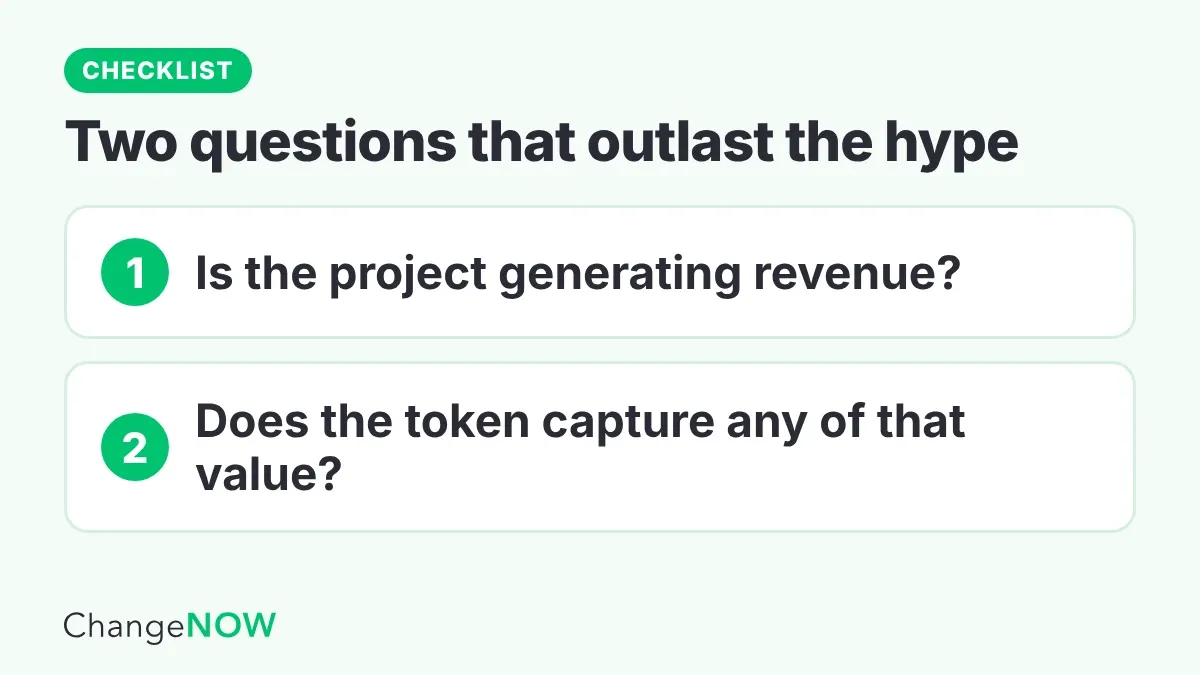
On the token side, unlocks, emissions, ownership concentration and fully diluted valuation (FDV) help show whether holders are being diluted while the project grows.
If the numbers hold up and the project still looks worth a position, a trader can swap into the token on ChangeNOW, which supports 1000+ currencies, and size the entry to fit the risk plan.
About Crypto Banter
Crypto Banter is a crypto media network built around live shows, with courses and newsletters for traders on the side. Its code of ethics commits the team to flagging show sponsors, avoiding paid reviews and disclosing holdings and conflicts where possible. Shows stream on the Crypto Banter YouTube channel.
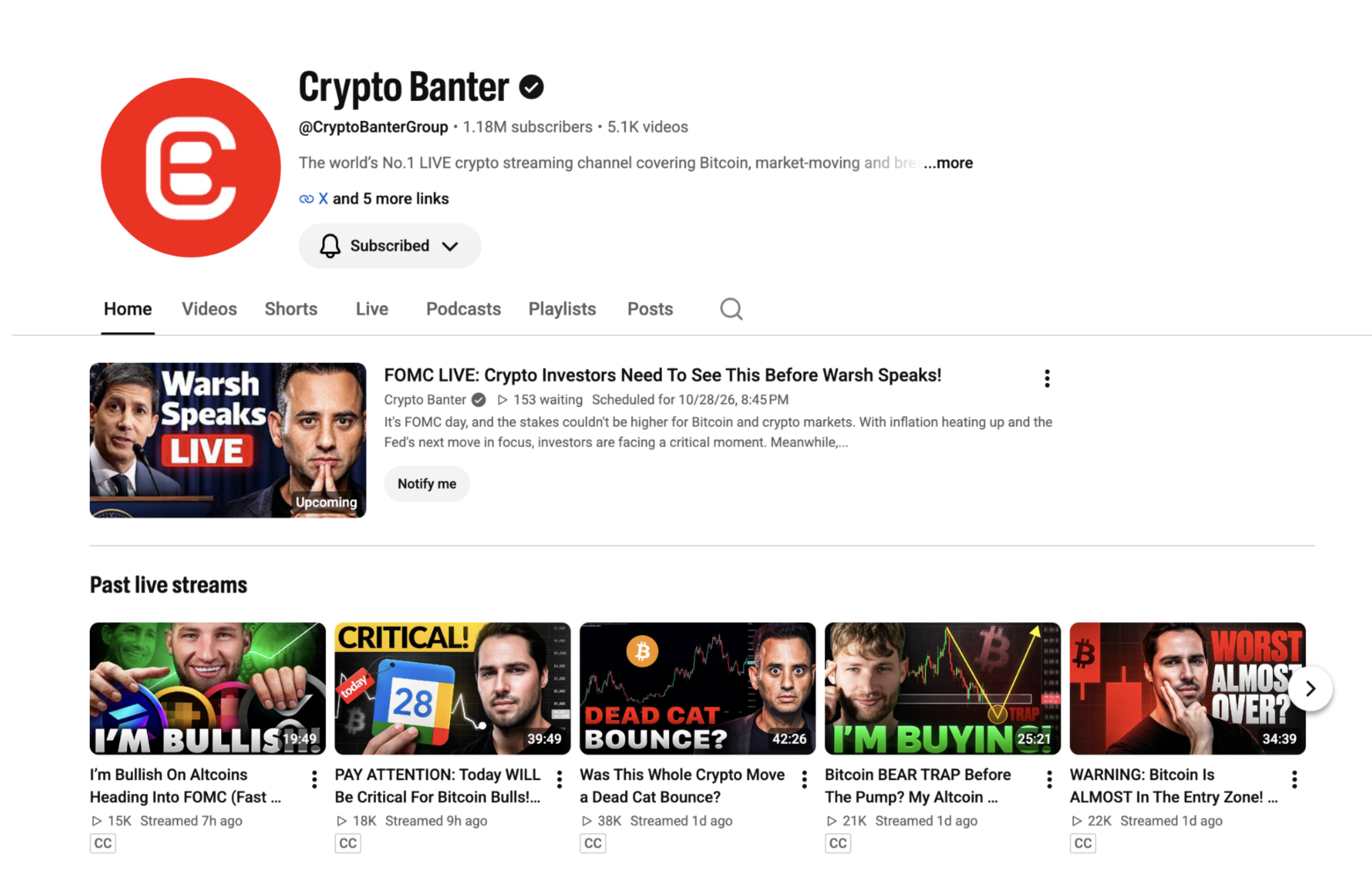
Crypto Banter YouTube channel page.
Alessandro Gibilaro is on the company team page and posts on X as @alessandrorisk. He hosts Risk Takers, a weekly YouTube interview show about building long-term wealth. Episode 14 features Michael Van De Poppe on the psychological cost of trading and how to survive market chaos.